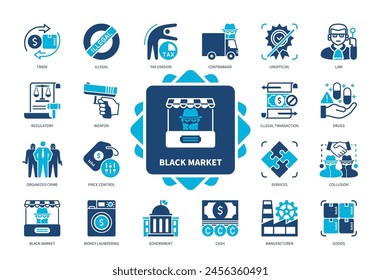
The black market for illegal drugs represents a complex and pervasive issue worldwide. This clandestine economy thrives outside legal regulations, driven by demand for substances that offer various effects, from pain relief to euphoric highs. Understanding the dynamics of the black market illegal drugs is crucial for grasping the broader implications for society, law enforcement, and public health.
- 5 live Investigates spoke online with a number of anonymous dark web users.
- According to the intracellular metabolism explanation, the androgenic-to-anabolic ratio of a given AR agonist is related to its capacity to be transformed by the aforementioned enzymes in conjunction with the AR activity of any resulting products.
- However, BEA's published input-output tables show that legal gambling providers spent approximately one-quarter of their post-tax revenue on intermediate inputs.
- The price set by the government appears as a useful tool to attract demand towards the public firm and fight black market activity, as well as to correct for the misperception of the health damage caused by cannabis consumption.
- Black markets have a number of negative effects.
Black Market Illegal Drugs
The illicit oil trade is a significant global security concern, as it provides substantial funding to dangerous non-state actors. Understanding these examples is essential in combating the detrimental effects caused by these illicit practices. Criminals exploit the complexity and volume of international trade to conceal the true nature of their transactions and commingle illicit funds with legitimate trade flows. Governments, businesses, and consumers must work together to combat these activities, implementing effective measures and regulations to mitigate the negative economic effects. For instance, counterfeit medicines may lack proper ingredients or fail to meet quality standards, potentially leading to serious health consequences. This loss of revenue can have a detrimental effect on government budgets, reducing funds available for public services and infrastructure development.
Illegal drugs are often classified into several categories based on their origin and effects, significantly influencing their presence in the black market:
Through a combination of data anonymization technology, a trading platform, and a feedback system, Silk Road created a haven for drug traders. This demand led to increased regulations and laws regarding how data is used; also, technological tools and platforms were created to serve users who prefer to live more anonymously. Finally, black markets often fund criminals. This is part of the controversy around Airbnb (ABNB +0.77%) and other home-sharing platforms, which some critics call illegal hotels. Black markets have a number of negative effects. Although alcohol was illegal during the time, drinking moved to hidden locations known as speakeasies, and alcohol was run by bootleggers.
Categories of Black Market Illegal Drugs
- Stimulants: These drugs increase alertness and energy levels. Examples include cocaine and methamphetamine.
- Opioids: Known for their pain-relieving properties, substances like heroin and illegally manufactured fentanyl fall into this category.
- Hallucinogens: Drugs such as LSD and psilocybin mushrooms alter perceptions and can lead to profound psychological experiences.
- Depressants: Substances like benzodiazepines are misused for their calming effects but pose serious risks, especially when obtained illegally.
- Semi-synthetic opiates come from opium but they have been altered so they don’t produce as many side effects.
- If this is indeed the case, the idea that for the government to provide the high quality product seems the best strategy to follow is strengthened, as now not only a lower average health damage together with a better economic outcome for the public firm are achieved, but also higher welfare levels.
- Often certain types of illegal products are traded for each other, depending on the geographical location.
- PDEA, on the other hand, has already secured samples of confiscated illicit cigarettes and is subjecting these to laboratory testing to detect any possible drug content.
Factors Fueling Black Market Drug Trade
Several factors contribute to the persistent issue of black market illegal drugs:
- Demand for Accessibility: Individuals often seek alternatives when legal options are limited or unavailable.
- Stigma and Prohibition: Societal views on certain substances can perpetuate their illegal status, driving users to underground markets.
- Profit Motive: The potential for substantial financial gain attracts criminals and organizations to engage in drug trafficking.
- Economic Disparity: In regions with limited opportunities, involvement in the drug trade can appear as a viable option for individuals seeking financial stability.
Consequences of Black Market Drug Trade
The ramifications of the black market illegal drugs trade extend beyond individual users. Some key consequences include:
- Health Risks: Users often encounter adulterated substances, leading to severe health complications and overdose.
- Crime and Violence: The competition and territorial disputes among traffickers can result in increased crime rates and violence in communities.
- Economic Cost: Governments face enormous financial burdens concerning healthcare, law enforcement, and the justice system related to substance abuse.
FAQs about Black Market Illegal Drugs
What are common methods used to obtain black market drugs?
Methods include online purchases via the dark web, street deals, and connections through social circles. Users often seek discreet avenues to bypass law enforcement.
How do authorities combat the black market for illegal drugs?
Law enforcement agencies employ various strategies, including undercover operations, surveillance, and international cooperation to dismantle trafficking networks.
What role do socioeconomic factors play in drug use?
Poverty, lack of education, and limited access to healthcare contribute significantly to various substance use patterns and the reliance on the black market.
Conclusion
The black market illegal drugs industry poses significant challenges that require comprehensive strategies to address both supply and demand. Efforts to curb this trend must involve education, treatment options, and support for affected communities, focusing on reducing stigma and increasing access to legal substances.