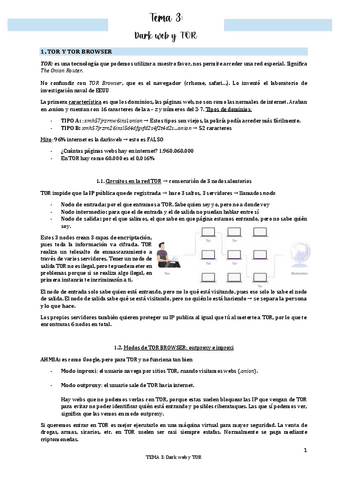
Analysts estimate billions of dollars change hands each year in these hidden markets. This hidden part of the Internet reachable via Tor/I2P browsers has millions of daily users worldwide and hosts sophisticated criminal markets. Welcome to your premier source for the latest in AI, cryptocurrency, blockchain, and AI search tools—driving tomorrow's innovations today.
The rise of digital currencies has transformed various aspects of our economy, but none have garnered as much attention as Bitcoin. Particularly notorious is its association with the dark web, a part of the internet that is not indexed by traditional search engines and is often linked to illegal activities. This article delves into the relationship between Bitcoin and the dark web, exploring its uses, implications, and the ongoing battle between law enforcement and cybercriminals.
The finding that multisellers and, in specific cases, multibuyers play a central role in connecting the ecosystem, thus contributing to its resilience, may illuminate how to better target future law enforcement operations. Since the beginning of DWMs’ activity, there has been a shift in the law enforcement approach from focusing on market admins towards sellers and buyers9,13. These different regimes suggest that the ecosystem’s resilience is mainly supported by the high demand of buyers rather than the response of the sellers. We showed that a small fraction of traders is responsible for a large fraction of the trading volume, and by analysing the networks of buyers and sellers, we found different resilience regimes. To identify multisellers, we first compute, for each pair of simultaneously active markets, the intersections of the daily lists of sellers obtained from step 2.
Bitcoin Dark Web
Bitcoin serves as the primary currency on many dark web marketplaces. Its anonymous and decentralized nature makes it attractive for users seeking privacy. Transactions are difficult to trace, which is why many individuals engaged in illicit activities prefer using Bitcoin over traditional currencies.
How Bitcoin Works on the Dark Web
- Hamilton and Pavey established that all transactions on the site must be conducted using only cryptocurrency.
- A footnote in Tracers in the Dark credits prior work, which did suggest a lack of anonymity in the Bitcoin blockchain but didn’t go as far as Meiklejohn’s research.
- Every communication is encrypted, so even the simplest transaction requires a PGP key.
- During its operation from 2011 to 2013, Silk Road was used by numerous drug dealers and other unlawful vendors to distribute illegal drugs and other illicit goods and services.
- Still, its ~16-month lifespan indicates it was more established than many short-lived markets, long enough to build repeat vendor/buyer activity before collapsing.
To understand the Bitcoin dark web ecosystem, it's crucial to know how Bitcoin transactions function. Each transaction is recorded on a public ledger known as the blockchain, but personal identities are obscured behind unique addresses. This anonymity has led to Bitcoin becoming the currency of choice for purchasing illegal goods and services. From narcotics to counterfeit items, the dark web houses a plethora of illegal marketplaces that facilitate these transactions using Bitcoin.
- When investigations focus on dark web marketplaces and services, analysts look for specific signals that link illicit sellers or buyers to blockchain flows.
- In panels (d, e), we show the median net income in USD of all sellers and buyers per quarter, respectively.
- This means that unlike fiat currencies, they are not controlled by a central entity and their value potentially increases over time.
- ToRReZ Market was a darknet marketplace active from 28 February 2020 until 17 December 2021, when it voluntarily shut down.
- To evade tracing, dark web actors use mixers, tumblers, coinjoin transactions, chain hopping, and privacy coins.
- To be used by security experts needing high-precision searches yielding few false positives.
Risks and Repercussions
While the use of Bitcoin on the dark web offers anonymity for buyers and sellers, it carries significant risks. Law enforcement agencies continuously monitor these transactions, utilizing advanced technology to unveil the identities behind the wallets. As a result, many individuals have been apprehended, leading to criminal charges and lengthy prison sentences.
Reputation and Regulation

The association of Bitcoin with the dark web has tarnished its reputation, creating a stigma around its use. While there are many legitimate applications for Bitcoin, the negative connotations can deter potential investors and users. In an effort to combat illegal activities, regulators around the globe are developing frameworks to oversee cryptocurrency transactions while ensuring user privacy remains intact.
Future Outlook
The future of Bitcoin on the dark web is uncertain. As technology advances, both cybercriminals and law enforcement are adapting their strategies. New cryptocurrencies that offer enhanced anonymity features are emerging, which could challenge Bitcoin’s dominance. However, as regulations tighten and surveillance techniques improve, the illicit use of Bitcoin may diminish, leading to a more legitimate ecosystem.
In conclusion, the intertwining of Bitcoin and the dark web exemplifies the complexities of digital currency in contemporary society. While it provides a platform for anonymous transactions, it also raises ethical and legal questions. As this landscape evolves, understanding the dynamics at play will be essential for users and regulators alike.